
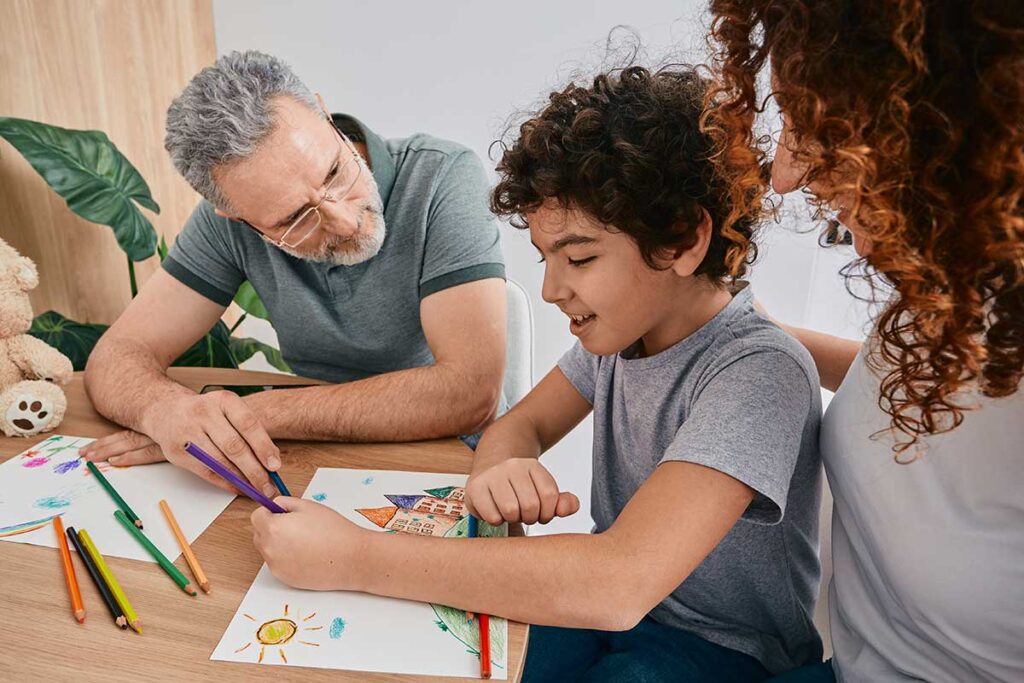
Supporting children with autism means helping them navigate communication challenges that can affect their ability to express themselves and interact with others. Communication difficulties are a hallmark of the spectrum, often making social interactions and daily communication struggles. At A Gem of Joy, we provide personalized ABA therapy in Maryland to help children overcome these challenges and develop the skills they need to connect with their world.
But why are some children with autism nonverbal or struggle with interpreting social cues? The answer lies in the way autism impacts communication—whether it’s trouble recognizing tone, understanding body language, or expressing emotions verbally. Understanding these unique challenges is the first step in supporting children with autism.
What Is ABA Therapy, and How Can It Help with Communication Challenges?
What Is ABA Therapy?
Applied Behavior Analysis (ABA) therapy is a scientifically backed approach used to help children with autism develop essential communication skills. Autism therapy services in Maryland focus on positive reinforcement and individualized strategies that make it easier for children to express their needs, whether through speech, gestures, or alternative communication methods.
How ABA Therapy Helps with Communication Challenges
For children experiencing communication challenges, ABA therapy can:
-
Enhance Verbal Communication: For children who can speak, ABA therapy helps them develop clearer speech and use language effectively in social situations.
-
Support Nonverbal Communication: Nonverbal children can learn to use communication devices, sign language, or picture exchange systems to express their needs.
-
Improve Social Communication: ABA focuses on social skills, helping children interpret body language, tone, and the nuances of conversation, including sarcasm and implied meaning.
At Maryland Autism Therapy Services, we customize our approach based on each child’s unique needs, ensuring that communication difficulties are addressed in a way that aligns with their abilities.
Common Communication Difficulties and Their Impact
Children with autism may face a variety of communication challenges that go beyond the spoken word. Some of these difficulties include:
Nonverbal Communication Barriers
Many children with autism struggle to make eye contact, read facial expressions, or interpret body language. These challenges can make it hard for them to understand others’ emotions or to express their own.
Literal Language Processing
Children on the spectrum often interpret language literally, which can make sarcasm, idioms, or jokes confusing. For example, saying “I’m so hungry I could eat a horse” might be taken as a literal statement, rather than an expression of strong hunger.
Expressing Emotions
Autism can make it difficult for children to identify and verbalize their feelings, leading to frustration and, at times, behavioral outbursts. Without proper communication tools, these emotions can become overwhelming for both the child and their family.
Real-Life Success Story: Helping a Local Family Overcome Communication Challenges
We recently worked with a family from Park Avenue in Baltimore, Maryland, whose 6-year-old son was experiencing significant communication difficulties. He was nonverbal and struggled with expressing his needs, leading to frustration. After starting ABA therapy, his parents were amazed by his progress. Using a picture exchange system, he could communicate basic needs like hunger or wanting to go outside. Over time, he also began using simple words and phrases, marking a huge leap in his communication abilities.
His mother shared, “We were so worried about how we could help him communicate. Now, seeing him able to express his needs is such a relief. ABA therapy has changed our lives.”
Strategies to Overcome Communication Challenges
If your child is experiencing communication challenges, there are several strategies that can help improve their ability to communicate effectively:
Visual Supports
Picture schedules, emotion charts, and apps that simplify ideas make it easier for children with autism to express themselves. Visual supports help bridge the gap when verbal communication is challenging.
Role-Playing and Social Practice
Practicing social scenarios, like greeting others or asking for help, helps children become more comfortable with real-life interactions. Predictability and repetition in these exercises can help children feel more confident in social settings.
Clear and Direct Language
Using simple, direct language with visual cues can make communication easier to understand. This approach minimizes confusion and helps children focus on key points.
Assistive Technology
Communication devices and apps can be especially useful for nonverbal children, giving them the tools they need to express their thoughts and feelings.
Why Communication Challenges Are Often Misunderstood
Many people don’t realize that communication challenges in autism are not just about speech but also about the way individuals on the spectrum process information. For example, nonverbal children may be highly intelligent and have much to say, but they lack the tools to communicate effectively with others. Similarly, those who do speak may still find social interactions challenging due to difficulties interpreting the tone or intent behind words.
This misunderstanding can lead to frustration for both the child and the people around them. That’s why it’s important to create a supportive environment and use strategies like autism therapy services to empower children to communicate in their own way. At A Gem of Joy, we work to raise awareness about these challenges and educate communities on how to better support children with autism.
Call to Action: Empower Your Child’s Communication Journey
If your child is facing communication challenges, we can help. At A Gem of Joy, we offer personalized ABA therapy services in Maryland to empower children to express themselves confidently and interact with the world around them. Don’t wait—reach out to us today at 443-971-3288 or [contact us online] to schedule an appointment and learn how our therapy can support your child’s communication goals.
Frequently Asked Questions (FAQ)
1. What are communication difficulties in children with autism?
Children with autism may face challenges in expressing themselves or understanding others. These challenges can be verbal, such as being nonverbal or having speech delays, or nonverbal, such as difficulty interpreting body language or understanding tone and facial expressions.
2. How does ABA therapy help with communication challenges?
ABA (Applied Behavior Analysis) therapy helps children improve communication skills by breaking down tasks into small, manageable steps. The therapy uses positive reinforcement to encourage the use of language, gestures, or communication devices, and teaches children to understand social cues and respond appropriately.
3. How long does it take for ABA therapy to show results?
The length of time it takes to see improvements varies for each child. Some children may show progress in communication skills within a few months, while others may take longer. The pace of progress depends on the child’s unique needs and the intensity and consistency of the therapy.
4. Can ABA therapy help children who are nonverbal?
Yes, ABA therapy is highly effective for children who are nonverbal. It teaches alternative communication methods, such as sign language, picture exchange systems, or communication devices, enabling children to communicate their needs and desires.
5. What other strategies can help with communication challenges in autism?
In addition to ABA therapy, there are several strategies that can support communication development, including:
-
Visual Supports: Tools like picture schedules and emotion charts to help children express their needs.
-
Social Skills Training: Role-playing and practicing social scenarios to improve communication in social settings.
-
Assistive Technology: Using apps or devices to help children express themselves when verbal communication is difficult.
-
Routine and Consistency: Establishing predictable routines that help children feel secure and reduce anxiety around communication.
More related blogs here:
https://agemofjoyaba.com/autism-treatment-blog/how-to-communicate-with-a-non-verbal-autistic-child/
https://agemofjoyaba.com/autism-treatment-blog/how-to-build-communication-skills-in-nonverbal-children-with-autism-at-home/
https://agemofjoyaba.com/autism-treatment-blog/strategies-for-effective-communication-with-children-on-the-spectrum/