


Your child avoids eye contact. They struggle to join group games. They miss social cues that other kids pick up instantly. You watch them sit alone at lunch, and your heart sinks.
Social skills don’t come naturally to many children with autism, but that doesn’t mean they can’t learn them. With the right support—specifically, Applied Behavior Analysis (ABA) therapy—children in Maryland are building connections, joining conversations, and navigating the world with more confidence every day.
This guide will show you exactly how ABA therapy develops social skills, what to expect as your child learns, and how to find the best in-home ABA therapy in Maryland.
What Are Social Skills, and Why Do They Matter for Children with Autism?
Social skills are the invisible rules of human interaction. They include:
- Making eye contact and maintaining appropriate physical distance
- Understanding facial expressions and tone of voice
- Taking turns in conversation without interrupting
- Reading body language and recognizing when someone is angry, happy, or confused
- Joining a group without dominating the conversation
- Asking for help when needed
- Recognizing and respecting personal boundaries
For neurotypical children, many of these skills develop naturally through observation and social experience. For children with autism, these connections don’t form automatically. The brain processes social information differently, which means social learning requires direct, intentional teaching.
Without intervention, social isolation can lead to anxiety, depression, and missed opportunities for friendship and belonging. That’s why early intervention matters. When children with autism receive targeted social skills training during their early years, they build a stronger foundation for meaningful relationships and greater independence as teenagers and adults.
Maryland’s early intervention system recognizes this critical need. That’s why Medicaid covers in-home ABA therapy for children with autism because building social skills now changes the trajectory of your child’s life.
How ABA Therapy Develops Social Skills Step by Step
Applied Behavior Analysis uses a systematic, evidence-based approach to teach social skills. Instead of hoping your child “picks up” social cues naturally, ABA therapists break down complex social behaviors into teachable steps and practice them intentionally.
Breaking Down Social Skills Into Teachable Components
Before your child learns how to join a group conversation, they need to master smaller skills: making eye contact for 3 seconds, saying someone’s name, asking a question about them. ABA therapists analyze the target skill and identify each component. This is called “task analysis.”
For example, if your child is learning to greet a peer, the task breaks down into:
- Notice the peer approaching
- Look toward their face
- Say “Hi [name]”
- Wait for a response
- Continue the conversation or leave appropriately
Rather than expecting your child to do all of this naturally, your therapist teaches each step, practices it until it’s solid, then chains the steps together. Over weeks, what started as separate, coached behaviors becomes a natural greeting.
Using Positive Reinforcement to Build Motivation
Children with autism often have different reinforcement profiles than neurotypical peers. They might not care about fitting in or getting peer approval. That’s where ABA gets practical.
Your therapist identifies what actually motivates your child—maybe it’s access to a favorite toy, a preferred snack, praise, or a fun activity. Then, every time your child successfully uses a social skill, they receive that reinforcement immediately. This creates a powerful learning connection.
Over time, as the skill becomes more automatic, the therapist gradually reduces the reinforcement and helps your child rely more on naturally occurring rewards—like a peer saying “That was fun!” or the satisfaction of having a successful interaction.
This is why Maryland’s in-home ABA therapy programs are so effective. When therapy happens in your home, therapists can identify real-world reinforcers and practice skills in the actual environments where your child needs them: family meals, sibling interactions, visits to the community.
Practicing in Real Situations
The most powerful learning happens when your child practices new social skills in actual social settings, not just with a therapist. This is called “generalization,” and it’s where many therapy programs fall short.
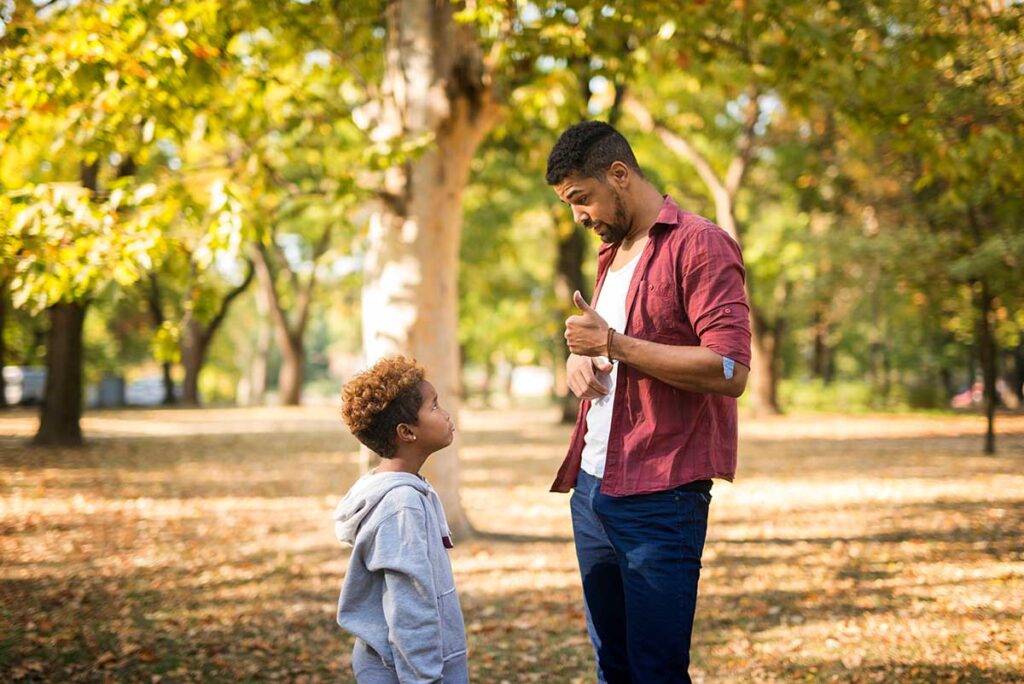
High-quality ABA programs don’t just work one-on-one with your child. They coach you and your family to practice skills during natural daily routines. Your therapist might observe your child at the park with other children, at school, or during community outings—then coach you in the moment on how to prompt and reinforce skills when they matter most.
In-home ABA therapy in Maryland makes this possible. Your therapist comes to your home, sees how your child interacts with siblings, and teaches you how to coach social interactions during dinner, homework time, or playtime. Your child practices with someone they see daily, in the environment where the skills matter.
What Real Social Skills Progress Looks Like
Social progress isn’t always dramatic. It’s often small, gradual, and deeply meaningful.
In Month 1, your child might make 2 to 3 seconds of eye contact with a therapist during a structured activity. That sounds small. But if your child previously made zero eye contact, this is progress.
By Month 3, your child initiates eye contact with a family member during a preferred activity. They’re not doing it because they have to—they’re doing it because it’s becoming natural.
By Month 6, your child approaches a peer at the park and says hello. It might be stiff and awkward at first. They might not know what to do next. But the first barrier—the approach—is broken.
By Month 12, your child joins a group activity with a few peers, with minimal prompting. They don’t initiate conversation yet, but they stay in the interaction instead of leaving or shutting down.
These aren’t overnight transformations. They’re the accumulation of hundreds of intentional practice sessions, supported by parents who understand what their child is learning and why.
How Parents and Caregivers Are the Real Agents of Change
Here’s what research and clinical experience consistently show: the most powerful predictor of progress isn’t therapy hours alone. It’s parental involvement.
Your therapist sees your child 10 to 15 hours per week. You see them 112+ hours per week. That’s why parent coaching is so critical in effective ABA programs.
When your therapist coaches you to recognize teachable moments—your child showing interest in a sibling’s activity, a natural peer interaction at the grocery store, a moment when your child is motivated to communicate—you multiply the learning opportunities exponentially.
Effective parent coaching in Maryland programs includes:
- Helping you identify your child’s current social skills and skill gaps
- Teaching you how to recognize when your child is close to using a new skill independently
- Coaching you in the moment during family routines and community outings
- Helping you reinforce progress naturally throughout the day without artificial rewards
- Troubleshooting barriers when your child’s anxiety or behaviors interfere with social learning
The goal is never for your child to become dependent on a therapist. The goal is for your child’s natural support system—parents, siblings, teachers, peers—to become the agents of change. A good ABA program hands skills over to you gradually, so your child’s progress accelerates once therapy ends.
The Maryland Advantage: Medicaid Coverage for In-Home ABA Therapy
In Maryland, children with autism diagnosis and Medicaid coverage have access to in-home ABA therapy. This is huge. Many states limit coverage or only fund center-based programs. Maryland’s approach—allowing therapy in the home—is backed by research showing that in-home services are more effective for skill generalization.
Why? Because your child learns where it matters. Social skills practice happens in your home with siblings, at your local park with neighborhood kids, at school, in community settings. Therapists coach you in real-time, not in an artificial clinic environment.
When you’re looking for ABA therapy in Maryland, ask:
- Does the program accept Medicaid?
- Do they provide parent coaching during in-home sessions?
- How do they teach social skills specifically?
- How will they measure your child’s progress toward social independence?
- Do they work with your child’s school and other providers?
Social Skills Programs in Your Maryland Community
A Gem of Joy provides in-home ABA therapy throughout Baltimore, Howard, and Montgomery counties. Our therapists and Board Certified Behavior Analysts specialize in helping children with autism build social skills that transfer to real life.
We know that every child learns differently. That’s why we begin with a thorough assessment of your child’s current social abilities and create a personalized plan focused on the skills that matter most for your family.
Whether your child is in early intervention or school-age, in-home ABA therapy can help. We work with Medicaid and understand Maryland’s coverage requirements. Discover how A Gem of Joy’s in-home ABA therapy in Brightwood, Fairhaven, Mt. Vernon, and Mt. Carmel supports families across Maryland.
Common Questions About Social Skills and ABA Therapy
At what age should children with autism start social skills training?
Early intervention (ages 0-3) is most powerful, but children can benefit from targeted social skills instruction at any age. The brain’s plasticity is greatest in early childhood, so starting as early as possible gives your child the most time to practice and internalize skills before school-age peer interactions become more complex.
How long does it take to see progress in social skills?
Small progress can appear within 4 to 6 weeks of consistent ABA therapy. Meaningful, observable progress in real-world interactions typically appears within 3 to 6 months. Major social gains (initiating interactions, joining groups, maintaining conversations) usually take 6 to 12 months of consistent therapy and parent coaching.
Can ABA help my child if they have high anxiety about social situations?
Yes. ABA therapy includes systematic desensitization and graduated exposure to anxiety-provoking social situations, combined with coping strategies and reinforcement. Over time, your child’s tolerance for social interaction increases. Addressing anxiety is often the first step in social skills teaching.
What if my child is nonverbal or has minimal speech?
Social skills are broader than words. Communication can happen through gestures, eye contact, body positioning, and alternative communication systems. ABA therapists are skilled at teaching functional communication—not just speech, but the ability to interact meaningfully with others. Many nonverbal children with autism develop social connections through these alternative modes.
How do I know if an ABA program is focusing on social skills, or just behavior reduction?
Ask directly. Request a behavior plan that includes specific social skills goals. Good programs balance challenging behaviors (like aggression or self-injury) with skill building. If a program is only addressing problem behaviors and ignoring social connection and peer interaction, your child is missing critical growth opportunities.
What Your Child Can Achieve
Your child doesn’t need to become neurotypical. Social progress for children with autism means building the specific skills your child needs to form connections, participate in activities they enjoy, and navigate the world with greater confidence and independence.
With consistent, evidence-based ABA therapy and family support, children with autism in Maryland are:
- Making genuine eye contact and holding conversations with peers
- Joining group activities at school and in the community
- Initiating social interactions rather than only responding to invitations
- Recognizing and responding to others’ emotions
- Managing anxiety in social situations
- Building real friendships
This is possible for your child. The research is clear. The methodology is proven. What’s needed is a commitment to consistent practice, skilled therapy, and a program that partners with your family.
Take the Next Step
If your child struggles with social skills, they don’t have to face it alone. In-home ABA therapy in Maryland has helped hundreds of families. A Gem of Joy provides personalized, evidence-based ABA programs that focus on the skills your child needs.
Contact A Gem of Joy today to schedule a consultation. We’ll assess your child’s current abilities, discuss your family’s goals, and create a plan to help your child build the social skills that lead to real-world success.
Your child’s journey to social confidence starts now.